How to fix it
Work through these in order, the most common causes come first.
Start With the Basics
Support direction: Confirm the pillow's design actually matches your sleep position.
A directional wrap like the Trtl needs to be positioned toward the side you lean, a 360-degree horseshoe supports any direction more evenly.
Strap engagement: If your pillow has a seat strap, verify it's actually clipped and snug, not just draped over the headrest.
Fit: A pillow that sits noticeably too high or too low on your neck is a sizing issue, not a defect.
Diagnosing Your Specific Problem
Head drops forward regardless of pillow: likely either an unsecured strap (if your pillow has one) or a pillow shape that doesn't include ch in support.
A J-shaped design addresses this directly.
Head slides sideways toward the window: points to insufficient side-wall density or height.
A denser foam horseshoe with taller sides holds up better than a soft or th in design under sustained lateral weight.
Support felt fine at first, then faded over the flight: usually a firmness or fill issue.
Our picks
Products we recommend
As an Amazon Associate I earn from qualifying purchases. Picks are based on manufacturer specs, independent reviews and owner reports.
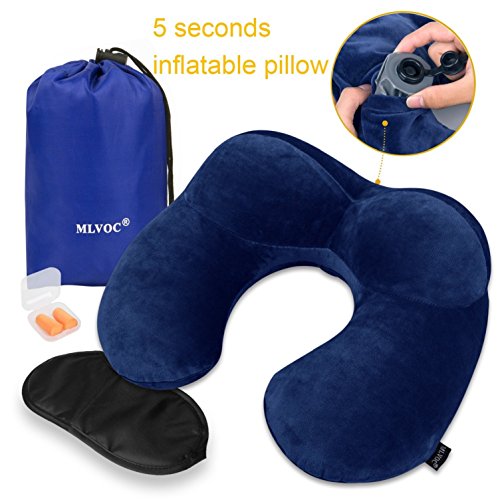
MLVOC
Its case rests on adjustable firmness lets you inflate it less for a smaller, softer fit on a child's neck and deflates flat to fit inside a kid's backpack alongside other travel items.
- Inflatable U-shape with adjustable firmness
- Soft micro-velvet cover
- Deflates flat for a backpack
- Includes eye mask and earplugs
- Typically priced under $25
✓ Pros
- Adjustable firmness lets you inflate it less for a smaller, softer fit on a child's neck
- Deflates flat to fit inside a kid's backpack alongside other travel items
- Soft velvet cover is gentler against a child's sk in than firmer foam
- Lowest price in the category, less to worry about if it gets left behind
✕ Cons
- Needs an adult or older child to inflate it before use
- Less durable long-term than a foam pillow for daily use
Cabeau
Works well once a child is close to adult neck size, typically early teens
- Dense memory foam horseshoe
- Seat strap system
- Quick-dry cover
- Compresses for a carry bag
✓ Pros
- Works well once a child is close to adult neck size, typically early teens
- Strap keeps the pillow anchored during a long flight, useful for a child sleeping deeply
- Same durable foam construction as the adult version
✕ Cons
- Too large and firm for most kids under about 10
- Priced higher than pillows built with kids' budgets in mind
Trtl
Very light and soft, comfortable for a child to wear for a full flight
- Scarf-style wrap with internal support plinth
- Weighs about 4.5 ounces
- Soft fleece exterior
- Machine washable
✓ Pros
- Very light and soft, comfortable for a child to wear for a full flight
- Wraps like a scarf rather than sitting like a stiff collar
- Packs small enough for a child's own backpack
✕ Cons
- One-size wrap can be loose on a smaller child's neck
- No back-of-head support if the child leans back to sleep
FAQ
Common questions
Why does my travel pillow feel fine at first but stop supporting my neck after an hour?
Softer fills, especially inflatable bladders and low-density foam, compress under sustained weight over time even if they feel supportive when you first put the pillow on. This is different from a manufacturing defect, it's a normal characteristic of softer materials. A denser memory foam pillow like the Cabeau Evolution S3 holds its shape longer under the same sustained pressure.
Is it normal for a travel pillow to work differently depending on which way I turn my head?
Yes, for directional-support designs like the Trtl, which places its rigid plinth against one side. If you turn away from the side the plinth supports, you'll get noticeably less support. This isn't a flaw, it's how that specific design works, and it's worth knowing before buying if you don't consistently lean the same direction.
Can a travel pillow be the wrong size for my neck?
A pillow sized for an average adult neck can sit too high or too low on someone significantly smaller or larger, changing the angle of support and reducing effectiveness. This is especially common with one-size, non-adjustable designs and is a frequent issue for kids using adult-sized pillows.
Should I return a pillow if it's not supporting my neck, or is t here a fix?
Try the fixes below first, many neck-support complaints come down to fit, seat type, or a mismatch between the pillow's design and your sleep position rather than a defect. If none of these apply and the pillow still isn't providing support during normal use, a return or exchange is reasonable.
Keep researching
Related guides & comparisons