How to fix it
Work through these in order, the most common causes come first.
Our picks
Products we recommend
As an Amazon Associate I earn from qualifying purchases. Picks are based on manufacturer specs, independent reviews and owner reports.
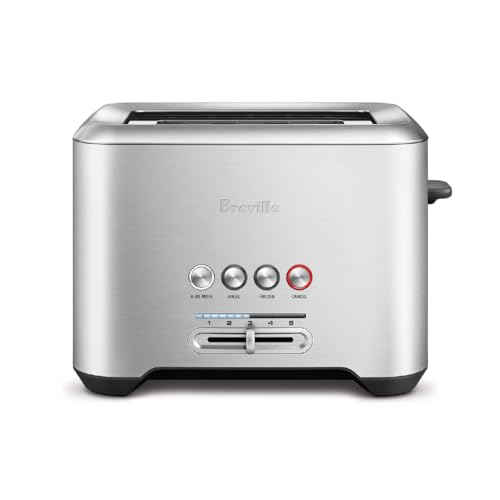
Best overallBreville
5-inch slots are the widest of any 2-slice toasterhere, handling bagels without compression.
- Thermostatic (Element IQ) shade control
- 1.5-inch wide slots
- Lift-and-look mid-cycle inspection
- 6-shade settings plus bagel and frozen modes
- Die-cast zinc alloy housing
✓ Pros
- Same thermostatic browning consistency as the 4-slice BTA840XL, just in a smaller footprint
- 1.5-inch slots are the widest of any 2-slice toasterhere, handling bagels without compression
- Lift-and-look avoids resetting the cycle when checking progress
- Die-cast housing feels noticeably more solid than the stamped-metal budget models
✕ Cons
- The most expensive 2-slice toaster in this roundup by a wide margin
- 1-year warranty is shorter than the Cuisinart CPT-320's 3-year coverage
- Die-cast finish shows fingerprints and needs regular wiping
Top pickBreville
It stands out for thermostatic shade control, same shade setting produces consistent results on a cold and warm toaster and lift-and-look feature, check toast without canceling the cycle.
- Thermostatic (Element IQ) shade control, not timer-based
- Four 1.5-inch wide slots
- Lift-and-look mid-cycle inspection
- Independent shade dials for left and right slot pairs
- Dedicated bagel, frozen, and reheat functions
- Die-cast zinc alloy housing, 5.5 lb
✓ Pros
- Thermostatic shade control, same shade setting produces consistent results on a cold and warm toaster
- Lift-and-look feature, check toast without canceling the cycle
- 1.5-inch wide slots accommodate thick artisan bread, large bagels, and English muffins
- Even browning top-to-bottom across the full slot height
- Die-cast housing, substantial build quality, stays cool to the touch
✕ Cons
- Heavier than most toasters (5.5 lb), moving it to clean under is slightly more effort
- Die-cast finish shows fingerprints and requires regular wiping to mainta in appearance
- The lift-and-look mechanism adds complexity, more parts in the carriage to wear
FAQ
Common questions
Why does one side of my bread always toast darker than the other?
In a 2-element toaster (one element on each side of the slot): if one element is running hotter than the other, one bread side toasts darker. Causes: one element is wearing out faster (resistance increases as the element ages, producing more heat in the remaining functional wire); or the elements were never perfectly matched from manufacture (common in budget toasters w here element matching is less precise). Test: toast two slices simultaneously and observe which bread surface (facing each slot wall) is darker. If the darker surface is always on the same slot wall: that element runs hotter. Fix for minor difference: rotate the bread 180° halfway through the cycle to equalize. Fix for significant difference: the asymmetric element is near end-of-life; plan for replacement.
My toaster makes the edges of bread crispy but the center is still soft, why?
The edges dry out and crisp through proximity to the element at the slot edges (the element is closest to the bread at the slot walls). The center of the bread is farther from any element surface and receives primarily radiant heat, at low shade settings, the radiant heat is not sufficient to fully dry the bread center. Fix: increase the shade setting, setting 3 or above provides enough element heat and time for the center to reach full browning temperature. If the center remains pale even at maximum setting: the elements may be at reduced efficiency (worn or scaled). Also: thicker bread requires higher settings and longer cycles to heat through; what looks like center unevenness is sometimes center undercooking, use a higher setting.
Is it normal for the first piece of toast in the morning to be different from the second?
Yes, entirely normal. The first cycle heats the element and toaster body from room temperature; the element reaches full operating temperature partway through the cycle, producing slightly less even browning than a pre-warmed element. The second cycle starts with a warm element and produces more consistent browning at the same setting. This is why professional bakers and hotel restaurants always discard or eat the first waffle/toast of the morning. For home use: accept that the first piece may be slightly different, or run a 30-second warm-up cycle with no bread before the first actual toast.
Keep researching
Related guides & comparisons