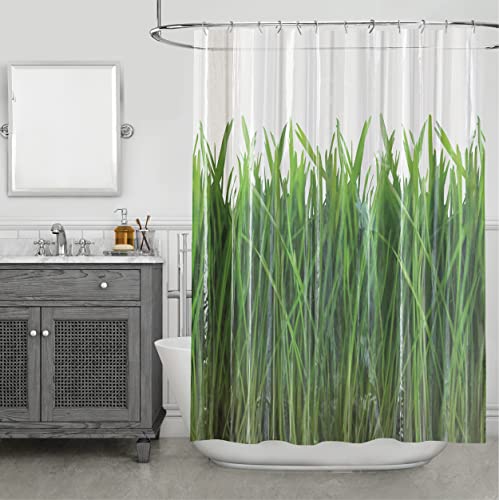
Fabric
Fabric
Prices and availability change, so confirm on Amazon.View on Amazon
Fabric vs Vinyl Shower Curtain: we break down the real differences, strengths, tradeoffs, and which one fits your situation.
As an Amazon Associate I earn from qualifying purchases. Picks are based on manufacturer specs, independent reviews and owner reports.
Choose the iDesign Fabric Curta in if: You already have or are buying a separate PEVA or vinyl liner Appearance and drape matter more than having a single all-in-one product
The differences that actually change the buying decision.
Fabric and vinyl solve different problems.
Fabric is the visual layer of a bathroom; vinyl (or PEVA) is the functional water barrier.
The decision is rarely "one instead of the other" so much as "which one do I need right now, and do I need both."
The iDesign fabric curta in is not waterproof by default.
Water passes through the weave during a shower unless the curta in is specifically treated with a water-repellent finish.
Used alone, it will let moisture reach the bathroom floor over the course of a normal shower.
Choose the iDesign Fabric Curta in if: You already have or are buying a separate PEVA or vinyl liner Appearance and drape matter more than having a single all-in-one product You prefer machine-washable maintenance over wipe-down maintenance
Bottom line
Choose the iDesign Fabric Curta in if: You already have or are buying a separate PEVA or vinyl liner Appearance and drape matter more than having a single all-in-one product
Fabric
Vinyl
FAQ
For the water barrier itself, vinyl (or PEVA) is the practical choice for daily use since it is waterproof on its own and wipes clean quickly between showers, which matters more when the curta in gets wet multiple times a day. Fabric works for daily use only when paired with a separate waterproof liner behind it, at which point you are buying two products instead of one. If simplicity and low maintenance matter most: vinyl or PEVA alone. If appearance matters and you do not mind maintaining two layers: fabric curta in over a PEVA or vinyl liner is the more common setup in daily-use bathrooms, since it combines a waterproof layer with a nicer-looking outer curtain.
The odor comes from residual manufacturing compounds off-gassing from the PVC material, and it typically fades substantially with in 3 to 7 days of hanging the curta in in a ventilated bathroom, faster if you unpack it and air it out for a day before installing. Washing a new vinyl curta in in cold water with a small amount of mild detergent before first use, then hanging it to dry fully extended, speeds up odor reduction. If the smell has not faded noticeably after two weeks, or is unusually strong, that particular unit may have a manufacturing defect and is worth returning. PEVA curtains, the chlorine-free alternative to vinyl, generally have a much fainter odor from the start.
It depends on what is being measured. A fabric curtain, since it typically hangs as a decorative outer layer without directly touching standing water, often lasts 2 to 4 years before fading or thinning. A vinyl or PEVA liner, which sits closest to the water and gets washed or wiped more frequently, typically needs replacement every 6 to 18 months depending on gauge and how often it is cleaned, thinner PEVA on the shorter end, thicker vinyl on the longer end. In a two-layer setup, the outer fabric curta in nearly always outlasts the inner liner, which is one reason liners and curtains are sold as separate products rather than fixed pairs.
Only if it is specifically treated and labeled as water-repellent or waterproof, such as the Zenna Home Waterproof Fabric Shower Curta in covered in our shower curta in guide. An untreated fabric curtain, even a thick one, will let water pass through the weave and soak the bathroom floor over the course of a shower. Water-repellent fabric curtains use a coating that causes water to bead and run off rather than absorb, functioning similarly to a ra in jacket. These work adequately for a single person taking a quick shower, but tend to let more water through than a dedicated PEVA or vinyl liner during a longer, hotter shower w here more water contacts the curta in surface over time.
Keep researching