Fabric Denier Ratings
Denier (D) measures fiber thickness and density in the shell fabric.
A 1000D shell, like the Cotopaxi Allpa packs, resists abrasion from repeated dragging and dropping better than a 400D shell, like the Peak Design Travel Backpack.
Higher denier isn't automatically better in every respect, since it usually adds empty bag weight, a real consideration on any weight-restricted carrier.
Denier is separate from waterproofing.
A lower-denier fabric can still be treated with a durable water repellent (DWR) coating or built from weatherproof canvas, as on the Peak Design pack, and perform well in light ra in despite a lower fiber density number.
Hip Belt vs. Frame Suspension
A hip belt alone is a padded strap around the hips that offers some stabilization but still routes most of the carrying load through the shoulder straps.
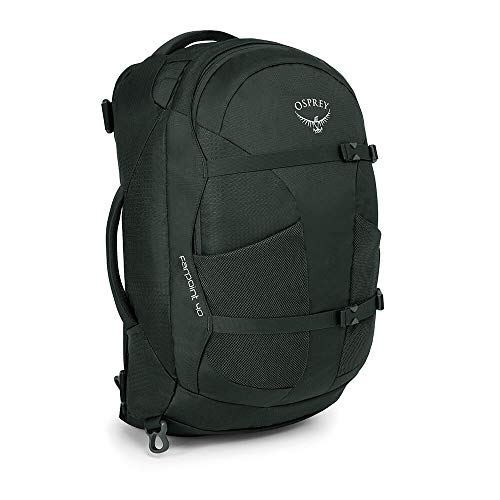
A full frame suspension system, like the Osprey Farpoint 40's LightWire frame, is a semi-rigid internal structure that actively redirects weight down through the frame and into the hip belt, meaningfully reducing shoulder fatigue on a heavier, fully packed bag.
If your itinerary involves carrying the bag for more than 15 to 20 minutes at a stretch regularly, a true frame system is worth the added cost and weight.
For mostly door-to-door travel, a hip belt alone is usually sufficient.
Suitcase-Style vs. Top-Loading Access
A suitcase-style, full-wrap zipper opening lays the bag flat, showing and reaching everything at once, similar to a piece of luggage.
A top-loading or front-panel design accesses the ma in compartment from a single point, which can offer marginally better weather sealing but requires more digging to reach items at the bottom.
Most travel-specific packs released in recent years use suitcase-style openings because the packing convenience outweighs the minor sealing tradeoff for the average traveler.
Reading Airline Carry-On Limits Correctly
Airlines publish size limits as three dimensions, not a single liter number, and a bag's marketed liter capacity doesn't map predictably to those dimensions across different shapes and brands.
Always compare a bag's actual height, width, and depth (available in most product listings) against the airline's published numbers.
Budget carriers frequently have a separate, smaller free personal item limit in addition to a paid larger cab in bag option.
Check both limits separately if a budget carrier is part of your itinerary, since a bag that clears a standard carry-on sizer can still exceed a budget carrier's free personal item allowance.
Weight Limits, Not Just Size
Some carriers, particularly budget airlines, enforce a weight limit on carry-on bags in addition to a size limit, sometimes as low as 10 kilograms.
A heavier-shell-fabric bag eats into that allowance before you've packed anything, so check a bag's published empty weight against any weight-restricted carrier's limit before relying on it.
Our picks
Products we recommend
As an Amazon Associate I earn from qualifying purchases. Picks are based on manufacturer specs, independent reviews and owner reports.
Cotopaxi
35L sits closest to budget-carrier personal item limits among purpose-built travel packs
- 35L suitcase-style opening
- 1000D TPU-coated polyester, recycled fabrics
- Air-mesh back panel
- Removable hip belt
- Luggage pass-through strap
✓ Pros
- 35L sits closest to budget-carrier personal item limits among purpose-built travel packs
- Suitcase-style opening suits repacking quietly in shared hostel rooms
- Durable shell holds up over weeks of tra in stations and cobblestone streets
✕ Cons
- Even at 35L, some strict Ryanair-style sizers may still flag it at the gate
- Th in hip belt offers less support than a hiking-style harness on long walking days
- Limited external organization for quick-grab items like a passport or phone
Osprey
Frame suspension and hipbelt carry weight better on long walks between tra in stations
- 40L with removable 11L daypack
- LightWire frame suspension
- Stowable harness
- Zip-away hipbelt
- Lockable ma in compartment
✓ Pros
- Frame suspension and hipbelt carry weight better on long walks between tra in stations
- Removable daypack works as a day bag for sightseeing without the ma in pack
- Widely used by long-term backpackers, with a strong multi-year durability track record
✕ Cons
- 40L exceeds several budget-carrier personal item limits, may incur a gate fee
- Two-piece system is bulkier than a single travel pack when both pieces are combined
- Higher price than the Cotopaxi packs at typical retail
Peak Design
Its case rests on compresses to a smaller, stricter-sizer-friendly footprint when needed and three separate access points make it easy to grab items without unpacking.
- Expands from 35L to 45L via external compression straps
- Weatherproof 400D recycled nylon canvas shell
- Rear, top, and side access with MagLatch closures
- Tuck-away hip belt and sternum strap
- Compatible with Peak Design packing cubes and camera cubes
✓ Pros
- Compresses to a smaller, stricter-sizer-friendly footprint when needed
- Three separate access points make it easy to grab items without unpacking
- Weatherproof shell holds up in ra in at bus stops and gate walks
✕ Cons
- Tuck-away straps take a bit of practice to stow cleanly
- Heavier than the Osprey Farpoint 40 when fully packed
FAQ
Common questions
What does the denier (D) number on a backpack's fabric mean?
Denier measures the thickness and density of the fabric fibers, and higher numbers generally mean thicker, more abrasion-resistant fabric, though not necessarily more waterproof. A 1000D shell (Cotopaxi Allpa) resists scuffing and dragging better than a 400D shell (Peak Design), while the 400D canvas on the Peak Design pack is treated for additional weatherproofing that a higher denier number alone doesn't guarantee.
What's the difference between a hip belt and a frame suspension system?
A hip belt alone, as on the Cotopaxi Allpa packs, is a padded strap that wraps around the hips but relies mainly on the shoulder straps to hold the bag's structure. A frame suspension system, like the Osprey Farpoint 40's LightWire frame, is a semi-rigid internal structure that actively transfers weight from the shoulders down through the frame to the hip belt, which is why framed packs feel noticeably lighter under the same load.
How do I read an airline's carry-on size limit correctly?
Airlines typically publish limits as three dimensions (length x width x depth) rather than a liter volume, and budget carriers often have a separate, smaller free personal item limit in addition to a paid larger carry-on option. Compare your bag's actual external measurements, not its marketed liter capacity, against the airline's published numbers, and check budget-carrier-specific limits separately if your itinerary includes one.
Is a heavier fabric always better for a travel backpack?
Heavier fabric (higher denier) generally means better abrasion resistance and longevity, but also more empty bag weight, which counts against you on airlines with strict weight limits even for carry-on bags. For a bag carried mostly by hand or worn briefly, lighter fabric can be the better tradeoff; for a bag used daily over months, heavier fabric usually wins out.
Keep researching
Related guides & comparisons