How to fix it
Work through these in order, the most common causes come first.
Understanding What Consistency Actually Means
A coffee grinder grinds consistently when it produces the same particle size distribution across every dose.
Consistency has two dimensions: Dose-to-dose consistency: every 18g dose produces the same distribution as the previous dose.
Measured by espresso extraction time variation, consistent grinds produce shots with in 1 to 2 seconds of each other.
Within-dose consistency: every particle in a single dose is as close to the target size as the burr quality allows.
Measured by particle size analysis (impractical at home) or by extraction quality.
Diagnosing by Symptom
Clumping in the catch cup: static electricity or oily dark-roasted beans.
Fix: Ross Droplet Technique (add 1 to 3 drops of water to beans before grinding).
Wide variation in espresso extraction time (5+ seconds): retention contamination, inconsistent distribution, or dull burrs.
Fix: purge before each dose, use a WDT tool for distribution, consider burr replacement.
Fine powder coating everything: burrs are set too fine, or burrs are dull and producing excessive fines.
The Ross Droplet Technique (RDT)
Static is the most common cause of inconsistent ground coffee distribution, and RDT is the simplest fix.
Add 1 to 3 drops of water to your beans in the hopper or dose cup, stir briefly, then grind immediately.
The trace moisture prevents static charge buildup on grounds.
The quantity of water is small enough that it evaporates before reaching the burrs in most cases and does not measurably affect extraction.
Results: grounds fall cleanly into the portafilter or basket without clumping or static flyaways.
Our picks
Products we recommend
As an Amazon Associate I earn from qualifying purchases. Picks are based on manufacturer specs, independent reviews and owner reports.
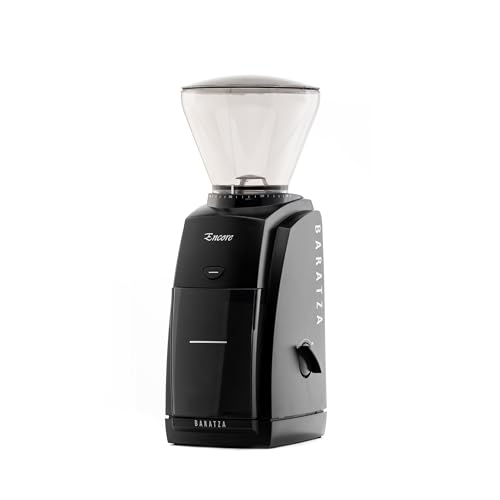
Best EspressoBaratza
The Baratza Encore ESP is the correct entry-level espresso grinder.
- Espresso-capable range
- 40mm conical burr
- Simple operation
- Baratza support
✓ Pros
- Espresso-capable grind range not available on the standard Encore, the correct upgrade for home espresso
- 40mm conical burr set produces consistent espresso particle sizes
- Baratza repair program is the industry standard for grinder support
- The most recommended entry-level espresso grinder by the home espresso community
✕ Cons
- Step-based adjustment, not stepless like higher-end grinders
- Not optimized for filter coffee at the finest end of its range
Best ValueBaratza
The most widely used entry-level burr grinder, proven over many years of production
- 40 grind settings
- Conical burr
- Simple design
- Entry price
✓ Pros
- The most widely used entry-level burr grinder, proven over many years of production
- 40 grind settings cover drip, pour-over, and French press correctly
- Baratza repair program, the most repaired and supported entry-level grinder
- The correct first burr grinder for anyone upgrading from a blade grinder
✕ Cons
- Cannot reach espresso-fine settings, the Encore ESP is the correct upgrade for espresso
- Timer not included, dose by eye or by weight with a separate scale
Best OverallBaratza
40mm steel conical burrs produce consistent particle size across filter and light espresso settings
- 40mm steel conical burrs
- 40 grind settings
- DC motor
- Built-in timer
✓ Pros
- 40mm steel conical burrs produce consistent particle size across filter and light espresso settings
- Built-in timer for dose-by-time grinding, more consistent than counting by eye
- DC motor is quieter than AC motor grinders at the same price
- Baratza's repair program covers the grinder well past the warranty period, the most supported grinder brand
✕ Cons
- Not capable of true espresso-fine settings, the Encore ESP is the correct espresso grinder from Baratza
- Timer dosing is less precise than weight dosing with a scale
FAQ
Common questions
Why does my grinder produce some very fine powder and some large chunks?
This is called bimodal distribution and is normal for conical burr grinders to a degree. Excessive bimodal distribution (visible chunks and powder in the same dose) usually indicates either dull burrs, a loose burr carrier, or bean channeling through the burr set. Check the burr carrier for wobble and consider replacing burrs if the grinder is over 3 years old with daily use.
Why do my espresso shot times vary by 5+ seconds between doses?
Extraction time variation of more than 3 to 4 seconds between doses from the same bean batch usually indicates inconsistent dose weight, inconsistent tamping pressure, inconsistent distribution, or grinder retention contaminating each dose with stale grounds. Rule out these variables before concluding the grinder is faulty.
How often should I clean my coffee grinder?
Light cleaning (brush out the chute and catch cup) every 1 to 2 weeks for daily users. Full burr cleaning (remove burrs, brush and wipe all surfaces) every 1 to 3 months depending on use volume. Oily dark-roasted beans require more frequent cleaning than light-roasted beans.
Can old burrs cause inconsistent grinding?
Burrs dull over time. A quality set of burrs lasts approximately 500 to 1000 kg of coffee (roughly 3 to 8 years of daily home use). Dull burrs produce more fines and more bimodal distribution. If the grinder is over 5 years old with daily use, burr replacement is the correct diagnostic step.
Keep researching
Related guides & comparisons