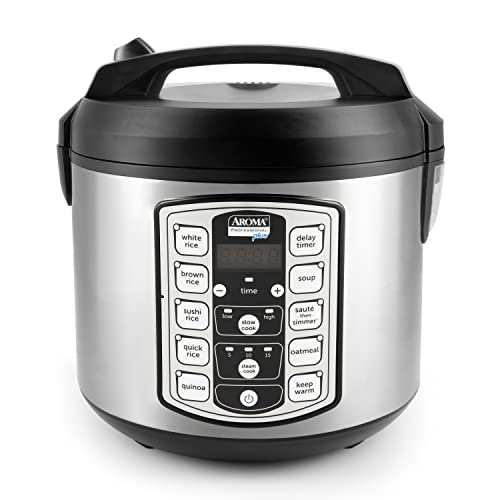
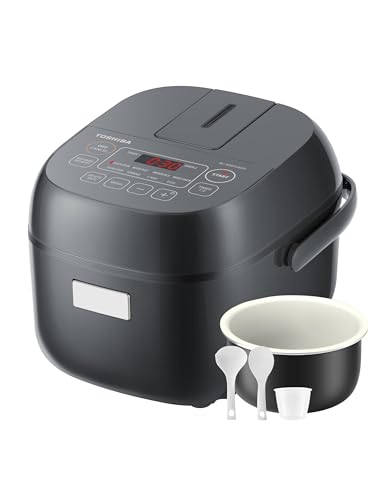
What are the best rice cookers right now?
Our top pick is the Zojirushi NS-TSC10 Micom Rice Cooker (best overall), because most reliable performer across white, brown, and sushi rice in this ranking. The runner-up is the Zojirushi NS-YAC10 Fuzzy Logic Rice Cooker and Warmer, followed by the Cuckoo CRP-P0609S Pressure Rice Cooker.
Is the Zojirushi NS-TSC10 Micom Rice Cooker worth it?
For most buyers, yes. It ranks #1 in our rice cookers research, though 5.5-cup capacity requires a second cycle for very large households.
What is the difference between fuzzy logic and basic rice cookers?
A basic rice cooker uses a single thermostat: when the pot temperature rises above 212°F (indicating water has fully absorbed or evaporated), it switches from cook to warm. One sensor, one decision, adequate for white rice but cannot adjust for different rice types, altitude, or gra in variability. A fuzzy logic rice cooker uses an internal computer with multiple sensors that measure temperature and cooking time throughout the cycle, then adjusts heat and timing based on rice variety selection and real-time readings. The result: more consistent gra in texture across rice types, better handling of brown rice (which requires more water and longer cooking), and better results at altitude. For white rice only: a basic cooker is adequate. For multiple rice types or brown rice: fuzzy logic produces noticeably better results.
What is induction heating in a rice cooker?
Standard rice cookers heat from the bottom only, a heating plate under the inner pot. Induction heating rice cookers (Zojirushi NP and Cuckoo induction models) heat the pot from all sides simultaneously using an electromagnetic field. The result: more even heat distribution, faster heating to target temperatures, and the ability to achieve the socorrat or crispy bottom layer (nurungji in Korean) intentionally. For daily white rice and occasional brown rice: fuzzy logic is sufficient. For professional-level rice quality or specialty preparations (sushi rice, Korean rice): induction heating is worth the premium.
What size rice cooker do I need?
Rice cooker capacity is measured in cups of uncooked rice. 3-cup: for 1 to 2 people making 1 to 2 servings, compact but only fills 2 servings comfortably. 5-cup: the standard household size for 2 to 4 people, covers most family meal preparation. 8-cup: for families of 4 to 6 or meal prepping large batches. 10-cup: for large families, batch cooking, or serving guests. Rice doubles in volume when cooked, a 5-cup uncooked measure produces approximately 10 cups of cooked rice, serving 5 to 6 people as a side dish. Buy one size up from your typical use, running a 5-cup cooker at capacity produces slightly inferior rice to running it at 60% to 80% capacity.
Can a rice cooker make things other than rice?
Yes, most rice cookers can steam vegetables and fish using the included steam tray, make oatmeal and porridge using the porridge setting (fuzzy logic models), cook lentils and quinoa using the mixed or brown rice setting, and some can make simple cakes. Zojirushi fuzzy logic models include explicit settings for porridge, sweet rice, mixed rice, and steaming. The 'Multi-Cooker' marketed versions (Instant Pot rice mode) handle pressure cooking and slow cooking in addition to rice, different product category with different strengths. For rice as the primary use with occasional vegetable steaming: any rice cooker covers it. For multiple cooking methods: a dedicated multi-cooker alongside a rice cooker is more capable than a hybrid.
Do expensive rice cookers make noticeably better rice?
Yes, at the extremes. The differences: texture consistency (Zojirushi produces drier, more distinct grains; basic cookers can produce mushy centers in large batches), bottom-of-pot behavior (Zojirushi avoids scorching; basic cookers sometimes scorch the bottom layer at maximum capacity), and brown rice quality (fuzzy logic handles brown rice well; basic cookers often produce underdone or uneven brown rice).
How long can rice sit in the keep-warm mode?
Most rice cookers keep rice edible at safe temperature (140°F minimum) for 5 to 12 hours. Zojirushi and Cuckoo premium models include extended keep-warm with a timer that tracks how long the rice has been kept, they alert when rice has been in warm mode for an extended period. Beyond 4 to 6 hours: most rice begins to dry out and yellow, especially white rice. Brown rice holds texture slightly better. The extended warm feature in premium models uses lower temperature cycling to slow drying, quality at 6 hours is noticeably better than a basic cooker's warm mode at the same time. For making rice in advance to eat throughout the day: a Zojirushi with extended warm is the practical choice.