As an Amazon Associate I earn from qualifying purchases. Picks are based on manufacturer specs, independent reviews and owner reports.
Our top picks
Short on time? Our top recommendation is the Coway Airmega AP-1512HH Mighty True HEPA Air Purifier.
Compare
At a glance
The traits that separate these picks, side by side.
| # | Product | Best for | Key feature | |
|---|
| 1 | | — | 246 smoke CADR covers rooms up to ~360 sq ft | Check ↗ |
| 2 | | — | 300 pollen CADR, highest in this price tier | Check ↗ |
| 3 | | — | HEPASilent filtration combining mechanical and electrostatic capture | Check ↗ |
| 4 | | — | 232 smoke CADR covers rooms up to ~350 sq ft | Check ↗ |
| 5 | | — | 350 smoke CADR covers ~540 sq ft | Check ↗ |
| 6 | | — | Wide intake designed to handle fur and large debris | Check ↗ |
| 7 | | — | 141 smoke CADR covers ~215 sq ft | Check ↗ |
| 8 | | — | 15 lbs of granular activated carbon plus 4 lbs of zeolite | Check ↗ |
| 9 | | — | Max2 true HEPA and carbon filter stack | Check ↗ |
| 10 | | — | ~260 smoke CADR covers ~400 sq ft | Check ↗ |
In depth
The 10 best, explained
Why each made the cut, where it falls short, and who should buy it.
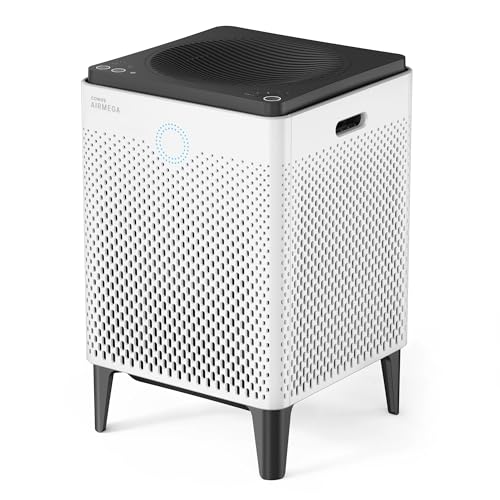
Top pickCoway
3 microns. The tradeoff: 230 dollars at list, roughly double a Levoit Core 300 for coverage under twice the area.
- 246 smoke CADR covers rooms up to ~360 sq ft
- True HEPA rated 99.97% at 0.3 microns
- Washable fabric pre-filter for pet hair
- Real activated carbon layer, not a coating
- Eco mode with particle-sensor auto shutoff
- 43 dB max, ~24 dB on speed one
✓ Pros
- 246 smoke CADR gives allergy households real headroom to run on a quiet low speed rather than a loud maximum one
- Washable pre-filter meaningfully extends HEPA filter life in homes with shedding pets
- Eco mode shuts the fan off after 30 minutes of clean air and restarts on rising particle counts, cutting running hours automatically
- 43 dB maximum keeps it usable overnight in a bedroom, which is w here allergy filtration matters most
- 42,000 ratings at 4.7 stars is the deepest reliability record in the category
✕ Cons
- 230 dollars at list, roughly double a Levoit Core 300 for coverage under twice the area
- Optical particle sensor responds well to visible smoke and less reliably to fine pollen-scale particulate
- Includes an ionizer that should be switched off, and the setting doesn't always persist through a power cycle
- Filter change indicator runs on a fixed timer rather than actual filter loading
Honeywell
3 microns. The tradeoff: louder than the Coway or Levoit at equivalent output, noticeably so at speed three.
- 300 pollen CADR, highest in this price tier
- True HEPA filtration, 99.97% at 0.3 microns
- Turbo Clean setting for rapid particle knockdown
- Exposed pleated filter with no plastic cage
- 3 fan speeds plus auto and sleep settings
✓ Pros
- A 300 pollen CADR beats nearly every competitor in its price range, which matters most during spring and fall spikes
- True HEPA rating is documented on the spec sheet rather than described vaguely as HEPA-type
- Exposed filter design without a plastic cage means more usable filtration surface per dollar
- Filters are widely stocked third-party and genuine, so five-year cost stays predictable
- 34,000 ratings back up consistent long-term performance
✕ Cons
- Louder than the Coway or Levoit at equivalent output, noticeably so at speed three
- Boxier plastic housing looks and feels less premium than the Coway's build
- No washable pre-filter, so all hair and large debris load directly onto the HEPA media
- Auto mode's sensor reacts more to visible particles than to fine pollen dust
Blueair
17 dB minimum noise is close to silent, making it the easiest unit here to sleep beside
- HEPASilent filtration combining mechanical and electrostatic capture
- As low as 17 dB on low speed
- Washable fabric pre-filter cover in several colors
- Compact footprint sized for nightstands
- True HEPA capture at 99.97% efficiency
✓ Pros
- 17 dB minimum noise is close to silent, making it the easiest unit here to sleep beside
- HEPASilent design reaches strong particle capture without the fan noise a purely mechanical filter needs at the same CADR
- Washable fabric pre-filter swaps out for a fresh look and adds a first line of defense against large debris
- Compact enough for a nightstand without dominating a small bedroom
- Low running cost keeps it cheap to operate continuously, which is how allergy purifiers should be run
✕ Cons
- Limited coverage of roughly 190 sq ft means it is bedroom-only, not a living-room solution
- Smallest owner base on this list at 4,800 ratings, so long-term reliability data is thinner
- No true carbon layer of note, so it does little for odors
- No auto mode or particle sensor, fan speed is manual
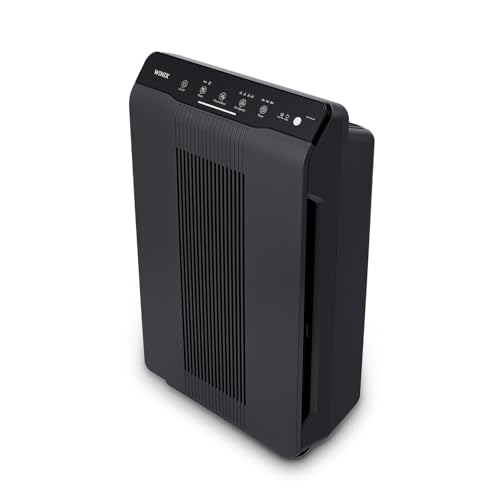
Winix
Washable AOC carbon pre-filter extends HEPA filter life meaningfully in pet and allergy households
- 232 smoke CADR covers rooms up to ~350 sq ft
- Washable AOC carbon pre-filter
- True HEPA filtration
- PlasmaWave ionization (disable for allergy use)
- 4 fan speeds plus auto and sleep modes
✓ Pros
- Washable AOC carbon pre-filter extends HEPA filter life meaningfully in pet and allergy households
- 232 smoke CADR is genuine mid-size coverage at a price well below the Coway
- Auto mode with a real particle sensor and numeric readout gives visible feedback on room conditions
- 30,000 ratings support consistent long-term behavior
- Lower five-year filter cost than most true-HEPA competitors thanks to the washable component
✕ Cons
- PlasmaWave ionizer should be switched off for allergy and asthma households, and the menu to disable it is not obvious
- Plastic housing feels less substantial than the Coway's
- Louder at top speed than the Coway or Blueair 411 at comparable output
- Washing the AOC filter is an extra maintenance step some owners skip, which shortens HEPA life
Blueair
350 smoke CADR is enough real capacity for an open-plan living space, not just a bedroom
- 350 smoke CADR covers ~540 sq ft
- HEPASilent filtration technology
- Washable fabric pre-filter cover
- Single large fan stays under 56 dB at max
- True HEPA capture at 99.97%
✓ Pros
- 350 smoke CADR is enough real capacity for an open-plan living space, not just a bedroom
- Single large fan reaches high CADR while staying under 56 dB even at full speed, quieter than smaller units pushed harder
- Washable fabric pre-filter cover extends the HEPA filter's usable life and comes in swappable colors
- 22,000 ratings back consistent long-term reliability at this size class
- HEPASilent design captures fine particulate without requiring a screaming fan to hit the CADR number
✕ Cons
- Larger physical footprint that needs real floor space, not a nightstand fit
- No auto mode or particle sensor, fan speed is set manually
- Minimal carbon means little help with cooking or pet odor
- Higher price than mid-size units for households that don't actually need 540 sq ft of coverage
Levoit
Wide, fur-ready intake is specifically well suited to shedding pets rather than a generic HEPA opening
- Wide intake designed to handle fur and large debris
- True HEPA filtration for rooms up to ~300 sq ft
- 24 dB sleep mode
- Display panel with fan speed indicator
- Compact cylindrical design
✓ Pros
- Wide, fur-ready intake is specifically well suited to shedding pets rather than a generic HEPA opening
- Since pet dander is a large particle, filtration efficiency is not the limiting factor here, and this unit is built around that reality
- 24 dB sleep mode is quiet enough for a bedroom shared with a pet
- Compact footprint makes it easy to place near a pet's usual resting spot without crowding the room
- 18,000 ratings show consistent behavior specifically from pet-owning households
✕ Cons
- No washable pre-filter, so fur and dander load directly onto the primary filter and shorten its life
- Th in carbon coating does little for pet odor beyond the first few weeks after a filter change
- No auto mode, so speed must be bumped manually after vacuuming or a shedding session
- Coverage tops out around 300 sq ft, undersized for open pet-friendly living areas
Levoit
97% capture. The tradeoff: 141 CADR caps honest coverage at about 215 sq ft, undersized for anything beyond a bedroom or small office.
- 141 smoke CADR covers ~215 sq ft
- True HEPA at 99.97% capture
- 24 dB sleep mode
- 360-degree cylindrical intake
- No ionizer or ozone byproduct
✓ Pros
- Genuine true HEPA at under 110 dollars, cheapest legitimate option for an allergy bedroom
- 24 dB sleep mode is quiet enough that most owners stop noticing it with in a day
- 360-degree intake is far more forgiving about placement in a cramped bedroom than rear-intake rectangular units
- No ionizer means no ozone byproduct and nothing to remember to switch off, a real plus for allergy and asthma households
- 96,000 ratings is the largest owner base of any purifier in this category
✕ Cons
- 141 CADR caps honest coverage at about 215 sq ft, undersized for anything beyond a bedroom or small office
- No air quality sensor or auto mode, fan speed is entirely manual
- Carbon layer is a th in coating that fades with in weeks of a filter change
- No washable pre-filter, so pet hair loads directly onto the HEPA media
Austin Air
15 pounds of granular carbon is a magnitude beyond any carbon coating in this category, and it's the only unit here that meaningfully handles gases and chemical off-gassing, not just particulate
- 15 lbs of granular activated carbon plus 4 lbs of zeolite
- Welded steel body, no plastic off-gassing
- Medical-grade HEPA rated for particulate down to 0.1 micron
- No ionizer, UV, or plasma additions
- 5-year manufacturer warranty on the housing
✓ Pros
- 15 pounds of granular carbon is a magnitude beyond any carbon coating in this category, and it's the only unit here that meaningfully handles gases and chemical off-gassing, not just particulate
- Welded steel construction with no plastic housing means the purifier itself doesn't off-gas, which matters specifically for chemical sensitivity buyers
- Medical-grade HEPA rated down to 0.1 micron exceeds the standard 0.3 micron true HEPA benchmark
- 5-year warranty reflects genuinely industrial build quality uncommon at consumer prices
- No ionizer, UV lamp, or plasma feature to worry about disabling
✕ Cons
- 45 pounds and a large drum shape make it the least portable unit on this list by a wide margin
- No digital display, sensor, or auto mode; it is a manual on/off/speed machine
- Most expensive purifier here relative to its HEPA-only CADR performance, since the price is paying for the carbon
- Replacement filters cost significantly more than any HEPA-only competitor and are needed roughly every 3 to 5 years
Coway
5 readout. The tradeoff: price sits well above the AP-1512HH for buyers who don't need the extra coverage or app features.
- Max2 true HEPA and carbon filter stack
- Smart app control with real-time PM2.5 readout
- Auto mode driven by a laser particle sensor
- Large-room coverage rated to ~1,560 sq ft (mfr) / ~525 sq ft honest
- Filter replacement indicator tied to actual air quality data
✓ Pros
- Laser particle sensor is a meaningful step up from the optical sensors in cheaper Coway and Levoit units, giving genuinely responsive auto mode
- App control with real-time PM2.5 numbers turns the purifier into an actual air quality monitor, not just a filter
- Max2 filter combines true HEPA and carbon in one cartridge, simplifying replacement
- Large-room capacity means it can run on a low, quiet speed in a mid-size space rather than maxed out
- 8,400 ratings at 4.6 stars show strong reliability at the premium tier
✕ Cons
- Price sits well above the AP-1512HH for buyers who don't need the extra coverage or app features
- App dependency means Wi-Fi setup and occasional firmware quirks that a purely mechanical unit doesn't have
- No washable pre-filter component separate from the ma in cartridge, unlike the AP-1512HH
- Smaller rating base than Coway's own budget model, reflecting a smaller buyer pool at this price
Levoit
Real particle sensor with a numeric air quality display gives genuine feedback, not just a status light
- ~260 smoke CADR covers ~400 sq ft
- Wi-Fi app control and scheduling
- Particle sensor with numeric AQI display
- True HEPA filtration
- Quiet operation at equivalent fan speeds vs. Winix
✓ Pros
- Real particle sensor with a numeric air quality display gives genuine feedback, not just a status light
- App scheduling lets the unit ramp down automatically overnight, which suits continuous allergy-season operation
- 260 smoke CADR covers a genuinely mid-size room, wider than the base Core 300
- Quieter than the Winix 5500-2 at equivalent fan speeds
- 28,000 ratings at 4.7 stars show the auto mode holds up over real-world use
✕ Cons
- Costs meaningfully more than the Core 300 for buyers who don't need Wi-Fi or auto mode
- App dependency adds a setup step and occasional connectivity friction that manual units avoid
- Same th in carbon coating as the Core 300, so odor performance is still limited
- Proprietary filter cartridge not shared with other Core-series models
How we chose these picks
Every pick below earned its place through documented strengths, verified specifications, consistent praise in reputable reviews, and owner-feedback patterns. We don't sell placements, and we don't invent test scores.
Mistakes buyers often make
- Choosing the cheapest option without checking warranty and support quality.
- Assuming all models work with your existing setup, verify compatibility first.
- Skipping the measurements: returns most often come from fit surprises.
- Chasing the newest release when last year's model does the same job for less.
How to choose: the factors that matter
- CADR and room size — Match the Clean Air Delivery Rate to your room: the purifier should cycle the room's air 4–5× per hour (ACH). Oversize slightly rather than undersize.
- True HEPA filtration — True HEPA (H13) captures 99.97% of 0.3-micron particles. 'HEPA-type' or 'HEPA-like' are marketing terms with weaker standards.
- Activated carbon — A substantial carbon filter helps with odors, VOCs, and smoke. Th in carbon sheets are mostly decorative.
- Noise at working speeds — Check dBA at the speed you'll actually run, many units are whisper-quiet on low and loud on the speed that achieves their CADR.
- Filter cost and life — Replacement filters are the real long-term cost. Compare annual filter spend, not just the unit price.
The bottom line
There's no single 'best' here, only the best match for your situation. Start from your must-have features, then choose the least expensive pick that covers them.
FAQ
Common questions
What are the best air purifiers for allergies right now?
Our top pick is the Coway Airmega AP-1512HH Mighty True HEPA Air Purifier (top pick), because 246 smoke CADR gives allergy households real headroom to run on a quiet low speed rather than a loud maximum one. The runner-up is the Honeywell HPA300 True HEPA Allergen Remover, followed by the Blueair Blue Pure 411 Air Purifier.
Is the Coway Airmega AP-1512HH Mighty True HEPA Air Purifier worth it?
For most buyers, yes. It ranks #1 in our air purifiers for allergies research, though 230 dollars at list, roughly double a Levoit Core 300 for coverage under twice the area.
Do air purifiers actually help with allergies?
For airborne allergens, yes, with an important qualification. HEPA filtration measurably reduces airborne pollen, pet dander, and mold spores in a room, and allergy and asthma guidance generally supports using them as one part of an overall approach. What a purifier cannot do is remove allergens that have already settled into carpet, bedding, and upholstery, which is w here the majority of dust mite allergen lives. Dust mite allergen in particular is heavy and settles quickly, so it spends little time airborne w here a filter can catch it. The realistic expectation: a correctly sized purifier running continuously in the bedroom noticeably reduces morning symptoms from pollen and pet dander, and does comparatively little for dust mite allergy on its own. Pair it with allergen-proof mattress and pillow encasements and weekly hot-water bedding washing for the mite problem.
Where should I put an air purifier for allergies?
The bedroom, first, before any other room. You spend roughly a third of your life t here with your face close to bedding that holds settled allergen, and overnight is when uninterrupted continuous filtration does the most work. Place the unit 3 to 6 feet from the bed rather than directly beside it, with at least 6 to 12 inches of clearance on all intake and exhaust sides. Do not push it against a wall or into a corner if the intake is on the back panel, and do not put it behind furniture or curtains. Elevating it on a low table can help in rooms with poor circulation, since larger particles concentrate lower. Keep the bedroom door and windows closed while it runs, otherwise you are filtering the whole house through one small machine.
What is the best air purifier for pet dander specifically?
Pet dander particles are relatively large, mostly 2.5 to 10 microns, so almost any true HEPA filter captures them efficiently. The differentiator for pet households is not filtration efficiency but pre-filter design and odor handling. A washable fabric or mesh pre-filter that catches hair and large fur before it reaches the HEPA media dramatically extends filter life in a home with a shedding animal, and it is the single most useful pet-specific feature. The Coway AP-1512HH and Winix 5500-2 both have washable pre-filters. For pet odor, you need actual carbon: budget units take the edge off for a few weeks, while the Aust in Air HealthMate's granular carbon bed handles it continuously. Practical setup for a pet household: a purifier with a washable pre-filter, vacuumed weekly, filter changed on schedule.
Should I get an air purifier with UV or an ionizer for allergies?
Neither adds meaningful allergy benefit over good HEPA filtration, and both carry drawbacks. UV-C lamps in consumer purifiers have contact times measured in fractions of a second as air passes, far short of what laboratory germicidal disinfection requires, so the practical effect on airborne microbes is small. Ionizers charge particles so they clump and settle faster, which lowers the airborne count but deposits allergen onto surfaces rather than trapping it, and many ionizing units produce small quantities of ozone as a byproduct. Ozone is a respiratory irritant and is specifically counterproductive for asthma. If a purifier you like happens to include these features, buy it for its CADR and filter quality and switch the ionizer and UV off. Do not pay a premium for them.
Keep researching
Related guides & comparisons