How an Air Fryer Actually Works
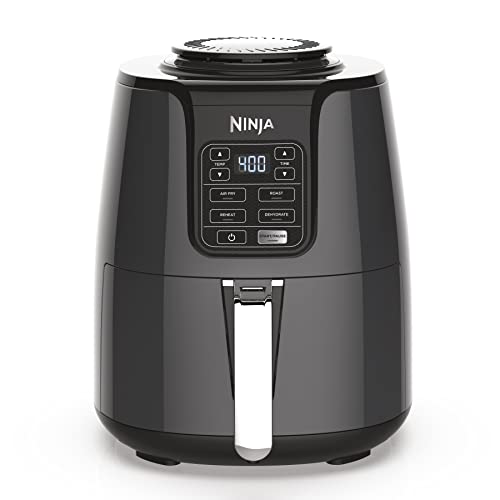
An air fryer is a compact convection oven. A heating element sits above the food, and a powerful fan directly above or behind it pushes hot air down and around the basket at high speed. Because the cooking chamber is small and the airflow is fast, the surface of the food dries and browns quickly, which is what produces the crisp texture people associate with frying.
That browning is the Maillard reaction, the same chemistry that browns toast and seared steak. It needs a dry surface and temperatures well above the boiling point of water, which is why air fryers work at 350 to 400°F and why overcrowding ruins results: packed food releases steam that has now here to go, and steamed food doesn't brown.
No air fryer actually fries. Deep frying submerges food in oil at around 350 to 375°F, which transfers heat far faster than air and produces a distinct, oil-rich crust. An air fryer gets close with a fraction of the oil, especially with foods designed for it, such as frozen fries, breaded chicken and roasted vegetables, but battered foods like tempura don't work because wet batter drips through the basket before it sets.
Understanding this explains almost every buying decision below. Bigger baskets help only if you spread food in a single layer. More wattage helps the fryer recover heat after you open the drawer. A basket shape with more floor area beats a taller one of the same volume, because air needs to reach the surface of the food.
The Four Types of Air Fryer
Air fryers now come in four ma in designs. The right one depends less on brand than on how many people you cook for and whether you want the appliance to replace anything else on your counter.
- Type — Best for, Strengths, Trade-offs
- Single basket (3 to 7 qt) — 1 to 4 people, Crispest results, simplest to use and clean, lowest price, Cooks one food at a time; larger households batch-cook
- Dual basket or dual zone (8 to 10 qt total), Families, ma in plus side, Two foods at two temperatures, finish at the same time, Wide footprint; each basket is smallish; more parts to clean
- Divided single basket (7 to 8 qt) — Families who sometimes cook large items, Works as one big basket or two zones (for example Ninja FlexBasket), Opening one zone opens both; heavy basket
- Oven style (10 qt and up — with racks), Replacing a toaster oven, Toasts, bakes, fits a small pizza, multiple racks, Less even crisping; racks need rotating; harder to clean
Single-basket models rema in the default recommendation because the drawer design gives the best airflow per square inch and the fewest parts to wash. Our list of the best air fryers overall is dominated by basket models for that reason.
Dual-basket models changed the category for families. Two independent drawers, each with its own heating element, let you cook chicken in one and vegetables in the other, and a sync or finish feature delays the shorter cook so both end together. The trade-off is that each drawer is usually 4 to 5 quarts, so neither one fits a whole chicken. Divided-basket designs solve that with a removable divider.
Oven-style air fryers and air fryer toaster ovens are versatile but compromise on the one job air fryers do best. Food on the lower rack browns more slowly than food near the element, so you rotate trays halfway through. If you already own a toaster oven you like, a basket model is the better addition.
Compare specific picks
- Best air fryers overall
- Best air fryers for families
- Best large-capacity air fryers
- Best air fryers under $100
What Size Air Fryer Do You Need?
Capacity is the most common buying mistake, in both directions. Too small and you cook in batches every night. Too large and a single portion rattles around a basket that takes up a third of your counter. Manufacturers quote capacity in quarts of basket volume, but what matters is floor area, because food crisps in a single layer.
- Household — Recommended capacity, What fits in one batch (approximate)
- 1 person — 2 to 4 qt, One portion of fries, two chicken breasts, a few salmon fillets
- 2 to 3 people — 4 to 6 qt, About 1 lb of wings or fries, a small batch of vegetables
- 4 to 5 people — 6 to 8 qt, or dual 8 qt, 2 lb of wings, a small whole chicken (in single large baskets)
- 6 or more — Dual 10 qt or oven style 10 qt+, Ma in and side together, or two racks of food
These are starting points. If you mostly cook frozen snacks, you can size down. If you want to roast a whole chicken, look for a single basket of at least 5.5 to 6 quarts or a divided basket with the divider removed, and check the manufacturer's stated maximum weight.
Measure your counter before buying. Air fryers vent hot air from the back or top, and most manuals ask for several inches of clearance on all sides and space above. A large dual-basket model can be 15 to 17 inches wide and over 12 inches deep, which rules it out for many small kitchens. Check that it fits under your upper cabinets with clearance if you plan to run it there.
Wattage, Power and Your Kitchen Circuit
Most basket air fryers draw 1,400 to 1,800 watts. Higher wattage mainly affects how fast the fryer preheats and how quickly it recovers temperature after you pull the drawer to shake the food. It matters most in larger baskets, w here t here is more food absorbing heat.
On a standard US 120-volt outlet, a 1,700-watt appliance draws a little over 14 amps. US electrical code generally requires 20-amp small-appliance circuits on kitchen counters, so one air fryer is fine, but running it alongside a kettle or microwave on the same circuit can trip a breaker. Don't plug an air fryer into an extension cord or power strip; manufacturers prohibit it because these cords can overheat at sustained high loads.
Running cost is low. Even at full power, a 20-minute cook at 1,700 watts uses under 0.6 kWh, and the thermostat cycles the element off once the chamber is hot, so real use is lower. At typical US residential electricity rates of roughly 15 to 20 cents per kWh, that is about 10 cents per meal, generally less than heating a full-size oven, which draws 2,000 to 5,000 watts and takes longer to preheat.
Temperature Range and Controls
Nearly every air fryer reaches 400°F, which covers most cooking. Some newer models reach 450°F for faster searing, and some drop to 90 to 105°F for dehydrating and proofing dough. Wide ranges are genuinely useful if you plan to make jerky or dried fruit, and irrelevant if you mainly reheat and crisp.
Controls fall into three camps: mechanical dials (simple and durable, but imprecise timers), digital panels with presets (most models), and app-connected fryers. Presets are starting points, not recipes; you will adjust them. App control is useful mainly for preheating remotely or getting a shake reminder on your phone, and less so as a reason to pay more.
Features that do earn their keep: a shake reminder, a pause that resumes when the drawer goes back in, and, on dual-zone models, a sync or smart finish button so both foods are ready at the same time.
Basket Coatings: Nonstick, Ceramic, Stainless and Glass
The basket and crisper plate are what you will touch, scrub and eventually replace, so the coating matters more than most spec-sheet features.
- Material — Pros, Cons, Care
- PTFE nonstick (most common) — Excellent release, easy to clean, inexpensive, Scratches with metal tools; wears over years; PFAS concerns for some buyers, Silicone or wood tools, soft sponge, avoid aerosol sprays
- Ceramic-coated — No PTFE; good release when new, Release often declines faster than PTFE; can chip, Gentle cleaning, avoid overheating empty
- Stainless steel — Very durable, no coating to wear, Food sticks more; harder to clean, Oil lightly, soak before scrubbing
- Glass bowls — Visible cooking, no coating, oven-safe storage, Heavier, can break, newer designs, Treat like ovenware
On safety: PTFE coatings are considered stable at normal cooking temperatures and beg in to break down only above roughly 500°F, which air fryers don't reach under normal use. PFOA, the chemical once used in making PTFE, has not been used by major US manufacturers for about a decade. Buyers who want to avoid PFAS entirely can choose ceramic, stainless or glass designs, accepting more effort when cleaning.
Whatever the coating, the biggest cause of early wear is aerosol cooking spray, whose propellants and lecith in leave a sticky film that bakes on. Use a pump sprayer or brush with oil instead.
Air Fryer vs Convection Oven vs Deep Fryer
- , Air fryer, Convection oven, Deep fryer
- Crispness — Very good on most foods, Good, slower, Best, especially battered food
- Oil used — A teaspoon to a tablespoon, Light coating, Several quarts
- Preheat — 2 to 5 minutes, 10 to 15 minutes, 10 to 15 minutes
- Capacity — Small to medium, Large, Small batches
- Cleanup — Basket and plate, Sheet pans, Filtering and storing oil
- Best at — Frozen foods, wings, vegetables, reheating, Large roasts, sheet-pan meals, baking, Battered fish, tempura, doughnuts
If you already have a convection oven with an air fry mode, test it before buying: many ranges now include one. They work, but the larger cavity means less concentrated airflow, so results are usually less crisp and cooking takes longer than in a dedicated basket.
Cleaning and Maintenance
Ease of cleaning determines whether an air fryer gets used daily or abandoned in a cupboard. Look for a removable crisper plate and a basket listed as dishwasher safe, then hand-wash anyway to extend the life of the coating.
- Let the basket cool — then soak it in hot soapy water for 10 to 15 minutes to loosen baked-on fat.
- Wash with a soft sponge; avoid steel wool and abrasive powders.
- Wipe the inside of the chamber with a damp cloth once it is cool, and check the heating element for grease splatter.
- Every few weeks — unplug the fryer, turn it over carefully and gently clean the element area with a soft brush, following the manual.
- Empty grease from the drawer after fatty foods; old fat smokes and smells on the next cook.
Liners save cleanup but affect airflow. Perforated parchment liners are fine; solid foil or paper that covers the whole plate blocks air from reaching the bottom of the food. Never preheat with a loose liner inside, because the fan can lift it into the heating element.
Safety, Durability and Recalls
Air fryers are generally safe appliances, but they run hot and draw a lot of current, so a few basics matter. Keep them on a heat-resistant surface with clearance from walls and cabinets, never block the rear vent, and don't move them while hot.
Recalls happen in this category. In 2023, for example, Cosori recalled about 2 million air fryers in the US after reports that a wire connection could overheat. Before buying, and aga in after registering your appliance, search the US Consumer Product Safety Commission (CPSC) recall database for the model number. Registering your purchase with the manufacturer is the most reliable way to be notified.
Most air fryers carry a one-year limited warranty; a few brands offer two. The parts most likely to wear are the basket coating and the crisper plate, and established brands typically sell replacement baskets, which can extend the useful life of the appliance well beyond the coating's lifespan. That replacement-part availability is one of the strongest arguments for buying from a major brand over an unknown one.
Noise and Smell
Air fryers are fan-driven, so all of them make noise, typically comparable to a range hood on a medium setting. Larger and higher-wattage models are usually louder. If you have an open-plan kitchen, check independent reviews that measure or compare noise rather than relying on marketing terms such as "quiet".
A plastic or chemical smell during the first few uses is common as manufacturing residues burn off. Run the empty fryer at high heat for 10 to 15 minutes in a ventilated room before cooking food. A persistent burning-plastic smell after that is not normal and should be reported to the manufacturer.
Buying Mistakes to Avoid
- Buying by quart number alone: compare basket floor area, since food crisps in one layer.
- Choosing an oven-style model for crispness: baskets crisp more evenly.
- Ignoring counter space and vent clearance: measure first, including under cabinets.
- Paying for presets and apps you won't use: the core features are temperature range, a good basket and easy cleaning.
- Overlooking replacement parts: a replaceable basket can double the appliance's useful life.
- Using aerosol sprays: they degrade nonstick coatings faster than anything else.
Which Air Fryer Fits Your Situation?
Small kitchen or one person
A compact 3 to 4 quart basket model preheats quickly and fits under cabinets. Avoid wide dual-basket units, which can take up a surprising amount of counter depth.
Couple or small family
A 5 to 6 quart single basket is the sweet spot. It fits a small whole chicken in larger versions and handles two portions of most foods in one batch.
Family of four or more
Choose a dual-basket model for main-plus-side meals, or a divided basket if you also roast whole chickens. Our Cosori vs Ninja comparison covers the most common family choice.
Replacing a toaster oven
An oven-style air fryer or an air fryer toaster oven gives you toast, baking and air frying in one footprint, at the cost of some crispness.
Go deeper
- Cosori vs Ninja air fryer
- How to choose an air fryer — step by step
- Ninja FlexBasket DZ071 review
- COSORI TurboBlaze review
Reading an Air Fryer Listing: What the Terms Mean
Air fryer listings are full of branded terms. Most describe the same underlying hardware: a heating element and a fan. Here is what the common labels usually mean in practice.
- Term — What it usually means, Does it matter?
- Air fry — Highest fan speed at your set temperature, Core function on every model
- Max crisp / Air crisp — Highest temperature plus maximum fan, for frozen foods, Convenient shortcut; you can set it manually
- Air broil — Top element at high heat with less fan, for melting and browning tops, Useful for cheese, fish and finishing
- Roast / Bake — Lower fan speed so food cooks through before the surface browns, Helps with baking and thicker cuts on models with variable fan speed
- Dehydrate — Low temperature (often 90 to 170°F) for hours, Only useful if the model goes low enough and you'll use it
- Rapid air / 360° circulation — Marketing names for convection airflow, Not a meaningful difference between brands
- Shake reminder — Alert halfway through a cook, Genuinely useful
- Smart finish / Sync — Dual-zone timing so both baskets finish together, Essential on dual-basket models
The terms that do change results are variable fan speed (which makes bake and roast modes different from air fry rather than just relabeled presets), the low end of the temperature range for dehydrating, and dual-zone sync. Everything else is a convenience preset you can replicate by setting temperature and time yourself.
Also check what a listing omits. Missing information about whether the basket and crisper plate are dishwasher safe, the warranty length or the availability of replacement parts is worth asking the seller about, or looking up in the manufacturer's manual, which most brands publish online. Reading the manual before buying is the quickest way to learn real capacities, clearance requirements and care instructions.
Finally, be cautious with capacity claims on oven-style models: the quoted volume is the whole cavity, but you can only use the rack area, and food needs space for airflow. Two racks of a 10-quart oven-style unit often hold less crispable food than a 6-quart basket.
Getting the Best Results
Most disappointing air fryer results come from a few habits that are easy to fix.
- Preheat for 3 to 5 minutes unless your model says otherwise; food placed in a cold basket steams before it browns.
- Cook in a single layer and shake or flip halfway.
- Pat food dry and use a light coat of oil; oil helps browning and seasoning stick.
- Reduce oven recipe temperatures by about 25°F and check early; air fryers cook faster than ovens.
- Use a meat thermometer rather than time alone for meat and fish.
- Food — Temperature, Time, Done when
- Frozen fries — 400°F, 15 to 20 min, shake twice, Golden and crisp
- Chicken wings — 380 to 400°F, 20 to 25 min, flip halfway, 165°F internal, crisp skin
- Boneless chicken breast — 375°F, 15 to 20 min, 165°F internal (USDA)
- Salmon fillet — 390°F, 8 to 12 min, 145°F internal (USDA)
- Broccoli or Brussels sprouts — 375 to 400°F, 10 to 15 min, Browned edges
- Reheating pizza — 350°F, 3 to 5 min, Crisp base, melted cheese
If food still isn't crisping, our troubleshooting guide walks through the causes in order, from overcrowding to a failing heating element.
Fix a problem
- Air fryer not crisping food: causes and fixes
How the Major Brands Differ
Brand matters less than type and size, but each major brand has tendencies worth knowing before you compare models.
- Brand — Known for, Watch for
- Ninja — Dual-zone and divided baskets, strong heating, wide model range, Large footprints on family models; many similar model numbers
- COSORI — Square baskets with good floor area, app-connected options, wide temperature ranges on newer models, Check the CPSC database for recalls on older models
- Instant (Instant Brands) — Vortex basket and oven models, ClearCook viewing windows on some, Some models share accessories only with in the Vortex line
- Philips — Premium build, fat-removal basket designs, long category history, Higher prices for similar capacity
- Chefman — GoWISE, Dash, Low prices, compact sizes, Fewer replacement parts and shorter support histories
A useful rule: if two models are similar on paper, choose the one whose manufacturer sells replacement baskets and crisper plates for it. That single factor often decides how long the appliance stays useful.
Air Fryers and Healthier Cooking
Air frying typically uses a teaspoon to a tablespoon of oil w here deep frying uses quarts, so foods that would normally be deep-fried usually end up with substantially less fat and fewer calories. The benefit shrinks for foods that are already low in fat or that you would otherwise bake.
Air fryers are not automatically healthy: frozen breaded foods are still processed foods, and the fat in chicken wings renders out but the sk in remains. Think of the appliance as a better way to cook, not a diet tool.
Acrylamide, a compound that forms when starchy foods brown at high heat, applies to air fryers just as it does to ovens and deep fryers. The FDA's general advice is to cook starchy foods such as fries and potatoes to a golden yellow rather than dark brown, and soaking raw potato slices in water for 15 to 30 minutes before cooking can reduce it further.
What to Cook Beyond Frozen Food
Most buyers start with frozen fries and nuggets. The appliance is more useful once you use it for fresh food.
Vegetables
Broccoli, Brussels sprouts, cauliflower, carrots and green beans roast quickly with a light coat of oil, browning at the edges in 10 to 15 minutes. Cut pieces to a similar size so they finish together, and don't overfill the basket.
Proteins
Chicken thighs, wings, pork chops and salmon cook well. Th in cuts can overcook quickly, so check internal temperature early. Fatty foods such as bacon work but drip fat that can smoke; a little water in the drawer underneath helps.
Reheating
Air fryers are excellent at reheating fried and crispy foods that go soggy in a microwave, from pizza to leftover fries. Use a moderate temperature around 350°F for a few minutes.
Baking
Small batches of cookies, muffins in silicone cups and even small cakes are possible, but the strong fan can blow light batters and the top can brown before the center sets. Lower the temperature by 25°F and cover with foil if the top darkens too quickly.
Accessories Worth Buying (and Skipping)
- Instant-read meat thermometer: the single most useful add-on for safe, juicy meat.
- Oil pump sprayer: gives an even coat without the residue of aerosol cans.
- Silicone tongs: protect the basket coating.
- Perforated parchment liners: easier cleanup without blocking airflow.
- Skip: bulky accessory kits with pans and racks that don't fit your basket; check dimensions against your model first.
Ownership Over the Long Term
Owners commonly report that the first thing to wear is the nonstick on the crisper plate, often after a year or two of daily use, followed by the drawer handle mechanism on heavily used models. Neither should end the appliance's life if replacement parts exist.
The heating element and fan rarely fail early, but when they do, an out-of-warranty repair is rarely economical for a basket air fryer. If the fan grinds, the element doesn't heat, or the fryer trips breakers on its own circuit, replace it. Recycle old units through local electronics recycling rather than household trash.
Before buying, read the warranty terms: what's covered, how long, and whether the manufacturer requires the original receipt. Register the product so you receive recall notices.
Who Shouldn't Buy an Air Fryer
If you regularly cook for six or more people, roast large cuts or bake trays of cookies, a full-size convection oven handles the volume better, and a range with a good air fry mode may cover the rest. If your counter is already crowded and you cook frozen foods rarely, the appliance may end up stored more than used. And if your ma in goal is the texture of battered, deep-fried food, a small deep fryer is still the only tool that truly delivers it.
How We Built This Guide
This guide draws on manufacturer specifications and manuals, US government guidance (USDA safe internal temperatures, CPSC recall records), independent reviews and patterns in owner feedback. We don't run our own lab tests, and we don't accept payment for placement. Product picks are linked from the pages listed below, w here each recommendation explains its strengths and limitations.
Every air fryer guide on PickHonest
This guide is the hub for our air fryer coverage. Each page below answers one specific question in more depth.
Best-of lists
- Best Air Fryers Under $100: Top Picks That Deliver Real Results
- Best Air Fryers for Families: 10 Large-Capacity Models for 4 to 6 People
- Best Air Fryers: Top Picks for Crispy Results Without Deep Frying
- Best Large Air Fryers: Top Picks for Families and Batch Cooking
In-depth reviews
- COSORI TurboBlaze Review: A 6-Quart Air Fryer With a Wide Range
- Cosori Air Fryer 5.8-Quart Review: Best Large Basket Air Fryer
- Cosori Pro II 5.8-Quart Air Fryer Review: Consistent Crispiness at the Right Price
- Ninja AF101 4-Quart Air Fryer Review: The Best Air Fryer Under $100
- Ninja Air Fryer Max XL Review 2026: The Crispiest 5.5 Quart Air Fryer
- Ninja FlexBasket DZ071 Review: One Big Basket or Two Zones
Head-to-head comparisons
- Cosori Pro II vs Ninja AF101: Which Air Fryer Should You Buy?
How-to guides
- How to Choose an Air Fryer: 4 Questions for the Right Pick
Problems and fixes
- Air Fryer Not Crisping Food: 8 Causes and Fixes
Our picks
Products we recommend
As an Amazon Associate I earn from qualifying purchases. Picks are based on manufacturer specs, independent reviews and owner reports.
Best OverallNinja
Ninja Foodi 2-Basket for cooking prote in and sides simultaneously.
- Two 4-quart baskets
- DualZone
- 8-quart total
- Ninja
✓ Pros
- Cook two different foods at two different temperatures simultaneously
- DualZone: finishes both baskets at the same time automatically
- 8-quart total capacity for family portions
Top pickNinja
Crispiest fries of any model in head-to-head comparisons
- 4-quart ceramic-coated basket
- 1550W element
- 105°F to 400°F range
- Top-element crisping design
- Two-knob analog interface
✓ Pros
- Crispiest fries of any model in head-to-head comparisons
- 105°F floor enables genuine dehydration, not just reheating
- Highest ratings volume in the category by a wide margin, 38,000+ ratings
- Simple two-knob interface with nothing to malfunction
✕ Cons
- 4-quart basket is honestly sized for 1 to 2 people
- No food-specific presets, every cook requires manual time and temperature
- Round basket wastes corner space versus square-basket competitors
Best Toaster OvenCosori
Cosori 10-quart for the most versatile large-capacity cooking.
- 10-quart
- 12 functions
- Multiple racks
- Cosori
✓ Pros
- 10-quart for whole chicken, full pizza, or large family batches
- 12 functions including toast, bake, broil, air fry
FAQ
Common questions
Are air fryers worth it?
For most households, yes. They cook frozen foods, wings and vegetables faster and crisper than an oven, use little oil and are cheap to run. They are less worthwhile if you already have a convection oven with a good air fry mode or mostly cook large roasts.
What size air fryer should I buy?
About 2 to 4 quarts for one person, 4 to 6 quarts for two or three, and 6 to 8 quarts or a dual-basket model for families of four or more. Basket floor area matters more than the quart number.
Is a dual-basket air fryer better?
For families who cook a ma in and a side together, yes. For one or two people, a single basket is simpler, crisps just as well and takes less counter space.
Are nonstick air fryer baskets safe?
PTFE nonstick is considered stable at the temperatures air fryers reach. If you prefer to avoid PFAS, choose a ceramic, stainless steel or glass design and expect more effort when cleaning.
Do air fryers use a lot of electricity?
No. A typical 20-minute cook uses well under 1 kWh, about 10 cents at typical US rates, usually less than heating a full-size oven.
Can you put foil or parchment in an air fryer?
Yes, if it doesn't block airflow and is weighed down by food. Never preheat with a loose liner, which the fan can lift into the heating element.
Why is my air fryer smoking?
Usually fat dripping onto the drawer bottom or residue on the element. Empty excess grease, add a little water to the drawer when cooking fatty foods, and clean the chamber regularly.
How long do air fryers last?
Many last several years with care. The basket coating usually wears first, so choosing a brand that sells replacement baskets extends the appliance's life.
Keep researching
Related guides & comparisons